The Typical Route For Back Pain
There's a good chance if you're reading this, you've tried one or many of those exercises on the right to help your back feel better and maybe it worked for a bit. But chances are, the back pain came right back.
So the relief you may or may not get from typical exercises either does not happen or if it does, it's temporary. So the question is: why? Why don't these exercises work for everyone long-term?
What's missing?

The Typical Route For Back Pain
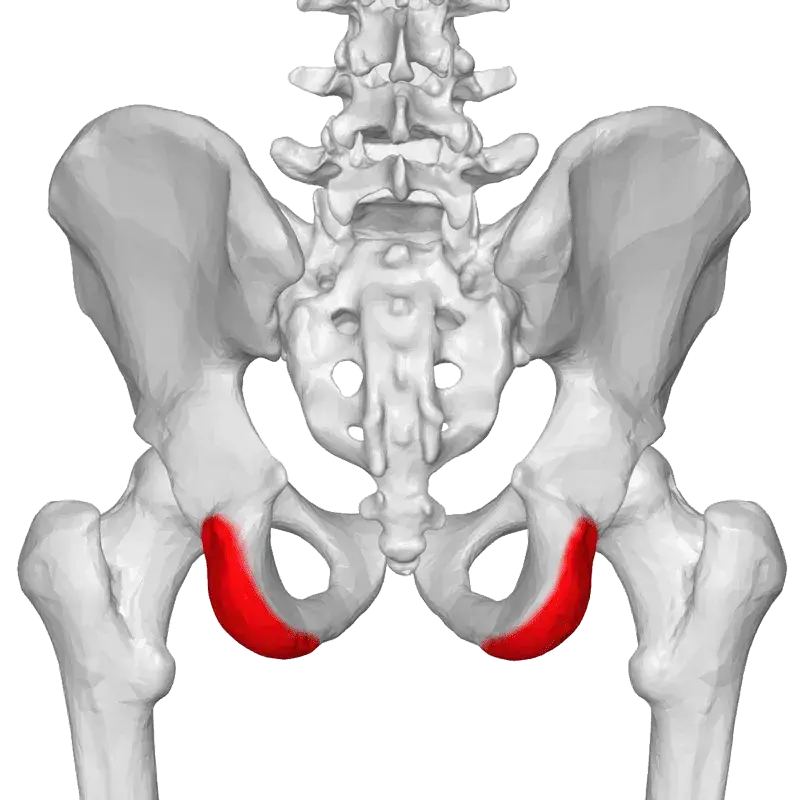
The Foundation of Your Spine
Learning what the sit bones are, what they're meant to do and how to feel them will be fundamental in learning how to improve and eventually eliminate your pain. This entire page will help you understand the connection between the two as you explore it. Let's start here.


The Problem with Slouching
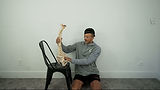

Feel The Foundation
The sit bones are designed to be sat on, but with how most of the seating options we have, it's hard to feel them. You can see the difference in the slouched vs. optimal angle as Dr. Naze, DPT, illustrates below.
Action Item: Sit on a hard surface (metal or wooden chair)
-
Will provide feedback to feel the sit bones on the chair
-
Will instantly take pressure off the hips and back
-
Will instantly improve your pelvic and spinal posture

It's About Usage
Sitting on your sit bones immediately changes what muscles are holding you upright. You learned earlier how sitting "with" on "in" your lower back uses those muscles that run up your back making them stronger.
But when you sit on your sit bones, immediately, your glutes, hamstring and core muscles are being challenged significantly more.
The slouch on the left vs. the upright on the sit bones is simply a difference in usage.


Just The Beginning
Learning how to sit on your sit bones not only will improve your pain, tightness and mobility issues, it will help you with any kind of training as you saw earlier. The chair and sit bone protocol is designed to teach you how to squat in a way that supports the very issue you're here for: your lower back.
Sitting on a chair is essentially a squat but supported. Should you sign up for our full Flobility Program, you'll learn how to transition from the sitting work to a squat. But for now you can get a preview of it below.
Improving Pain, Tightness & Strength At The Same Time

The Connection To The Core
Look how the person sitting on their sit bones has the same alignment to the the skeleton on the right? So besides improving lower back tightness, your sit bones are also connected to your core strength and stability.


Sit Bones + Core Muscles = Strength
The sit bones set the foundation, the core muscles help maintain it. The two combine to create strength and stability protecting your lower back and freeing your hips. In our full Flobility Program, you learn how to pair these two areas to build that strength and free your spine.
But what do you do from here with this information? Well, you learn how to apply it for now below!
Something To Start With

Move From The Foundation
Now that you've learned to sit on the foundation, learn to move with it to continue to take pressure off your spine and hips just as Dr. Naze, DPT below is showing.
Action Item: Move the spine with the hips
-
Will improve hamstring mobility
-
Will instantly take further pressure out of your back
-
Will instantly further improve your pelvic and spinal posture


Take The Next Step
You've seen the fundamentals of releasing your back pain and freeing your hips. You've tried some of the concepts and gained some relief. Now's the time to capitalize on this knowledge and take action.
Sign up for our full Flobility program and begin your path to a release your back pain. You'll have step-by-step follow along style training videos to learn how to implement the sit bone protocol and foundation to your day-to-day fast tracking your way to a pain-free life.
Flobility Program
Flobility Program
12-Stages, Daily Programming
Step-by-Step Video Instructions
In-Home (No Tools Required)
App: IOS/Android, Or Web-Based
Included Programming
-
Systematic Postural Restoration
-
Core Reset Training
-
Hamstrings
-
Glute Complex
-
Adductors (Groin)
-
Lateral Hip
-
Deep Intrinsic Core
-
Spine Mobility
-
Shoulder Musculature
-
Ankle Mobility
-
Soft Tissue Release (Rehab)

Can play sports without mobility issues or restrictions
-Jasmine | FL
Hear What Others Have To Say

- Brad | UT
Avoided surgery and wakes up pain free

- Alex | D. C.
From injury prone to bulletproof resilience

Dramatically improved backpain and glute growth